How to Fix a Leaky Faucet (Find the Right Part First)
If this fix touches water, gas, or power, the guide starts with the shutoff step and says when a licensed pro should take over.
Product links in this guide are affiliate links. If you buy through one, we may earn a small commission at no extra cost to you. It never changes which products we recommend.
A faucet drip is the most passive-aggressive problem in a house: slow enough to ignore, loud enough that you can’t. It’s also one of the most standardized fixes there is. Every faucet drips for the same reason, a worn seal somewhere inside, and the entire skill is identifying which seal your faucet uses before you drive to the store.
Quick Answer
A dripping faucet means a worn internal seal. On most faucets made in the last few decades that’s the cartridge, a $10–$20 drop-in part; on older two-handle faucets it’s a $5 rubber washer at the bottom of the stem. Shut off the water under the sink, pull the handle, take the old part to the hardware store, and swap in its twin. Under an hour, no plumber, and the drip is gone for years.
What You’ll Need
- A replacement cartridge or washer kit, $5–$20, bought after Step 4 and matched to the old part
- An Allen key set and a flathead screwdriver (handle screws hide under decorative caps)
- Slip-joint pliers and a cloth to protect the finish
- A faucet handle puller, $10–$15, only if the handle is mineral-welded on (see hard water)
- Silicone plumber’s grease, $5, for the new seals
Step-by-Step
Shut off the water and plug the drain
Under the sink are two small shutoff valves. Turn both clockwise until they stop, then open the faucet to drain the last of the pressure. Plug the sink drain with a rag: every faucet repair involves at least one tiny screw, and the drain knows it.
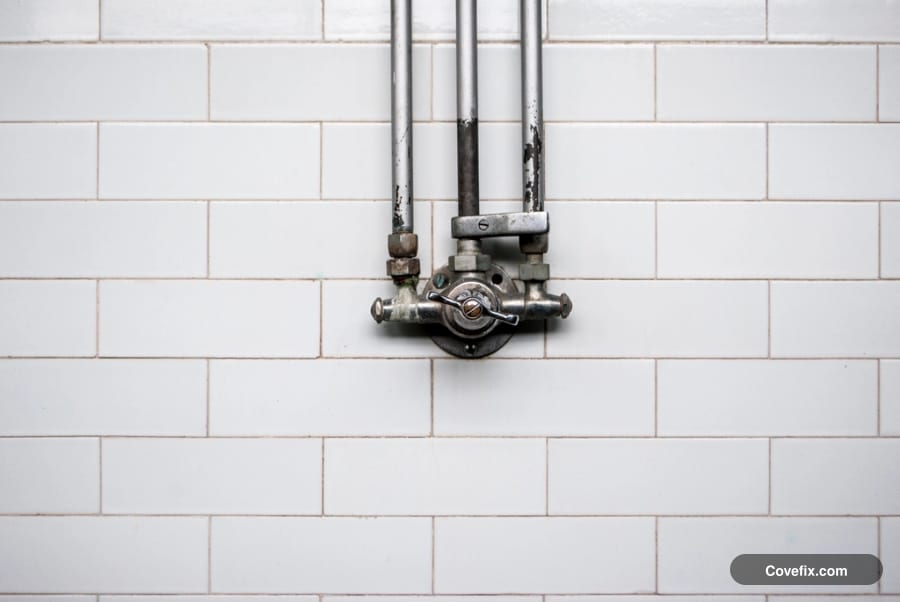 No valves under the sink, or valves that won’t budge? Use the home’s main shutoff and add “replace supply valves” to the someday list.
Identify your faucet type
One handle that lifts and swivels: a cartridge or ball faucet. Two handles that each turn half a revolution and stop: ceramic disk or cartridge. Two handles that screw down several full turns: an old compression faucet with rubber washers. This one distinction decides which $10 part you’re buying, so get it right before anything comes apart.
Pull the handle and extract the old part
Pry off the decorative cap, back out the handle screw (usually an Allen), and lift the handle off. Under it sits a retaining nut or clip: pliers for the nut (cloth first), fingers for the clip. The cartridge pulls straight up; a compression stem unscrews the same direction the handle turned. Stubborn handle that won’t lift? That’s mineral scale doing the welding. The puller cracks it loose without snapping the handle.
Match the part exactly
Take the old cartridge or washer to the store and match it: length, diameter, and the position of every tab and O-ring. “Close” does not seal. If the faucet has a visible brand (Moen, Delta, Kohler, Pfister), say so at the counter; most brands’ cartridges are stocked everywhere, and Moen famously replaces many of theirs free under a lifetime warranty if you call them first.
Grease, reassemble, and test
Wipe a thin film of plumber’s grease on the new part’s O-rings, seat it in the same orientation the old one came out (most cartridges are keyed, so match the tabs), and reassemble in reverse. Open the shutoffs slowly, then run the faucet through hot and cold. No drip at the spout with the handle off, no weeping around the handle base. Done.
Time and Cost
| Fix | Time | Cost |
|---|---|---|
| Cartridge swap | 30–45 min | $10–$20 |
| Compression washer + seat | 30 min | $5–$10 |
| Whole-faucet replacement | 60–90 min | $60–$120 |
| Plumber doing the same drip | — | $150–$350 |
Why This Works
Every faucet is a valve, and every valve seals rubber or ceramic against metal. Thousands of open-close cycles, plus the same mineral scale that chokes shower heads, slowly wear a groove in whichever soft part your faucet uses. Water finds the groove, and the drip starts. Replacing the sealing part restores the factory fit; that’s the whole repair. The metal body of the faucet is essentially immortal, which is why a $10 cartridge revives a faucet that looks done for.
Mistakes to Avoid
- Skipping the shutoff. A cartridge out of its body with the water on is a fountain aimed at your ceiling. Both valves off, faucet drained, every time.
- Buying the part before pulling the old one. Faucet cartridges look identical in the package and are not. Old part in hand, then the store.
- Forcing a stuck cartridge with pliers. Twisting breaks the cartridge off inside the body, and now it’s an extraction job. Stuck means mineral crust: puller for handles, penetrating oil and patience for cartridges.
- Dry-fitting rubber seals. Ungreased O-rings tear on the way in and the “new” faucet drips on day one. A dab of silicone grease is the difference between a fix and a redo.
Sink draining slow while you’re under there? The fix is the same 15 minutes as the bathroom version. Kitchen traps just hide more grease.
FAQ
Why does my faucet only drip at night?
Water pressure rises overnight when the neighborhood stops using water, and a seal that holds at daytime pressure starts weeping. It's the same worn part. The night drip just means you caught it early enough for a cheap fix.
Can I just tighten the handle harder to stop the drip?
On an old compression faucet, cranking the handle grinds the rubber washer into its metal seat and buys you a week at the cost of the seat itself. On modern cartridge faucets it does nothing at all. Either way, tightening harder turns a $5 repair into a $20 one.
How do I figure out my faucet's brand and model?
Look for a logo on the faucet body or handle base, then check under the sink, where installers often leave the manual or a model sticker on the supply lines. No luck? Pull the cartridge and bring it to the hardware store; the counter staff match mystery cartridges all day.
When does replacing the whole faucet make more sense?
When the body itself is pitted or corroded, when it's a no-name faucet whose cartridge nobody stocks, or when the finish is flaking into the water stream. A solid basic kitchen faucet runs $60–$120, which beats chasing $20 parts into a faucet that's failing everywhere at once.
Related fixes
Bathroom
Low Shower Water Pressure? Fix It in One Evening
Weak shower pressure is usually a mineral-clogged head, not your pipes. Soak it in vinegar, check the inlet screen, and know when it's something bigger.
Time20 min active + 1–2 hr soak Cost$2–$25 moderate
Bathroom
Unclog a Slow Bathroom Sink in 15 Minutes, No Chemicals
A slow bathroom sink is almost always hair caught at the pop-up stopper. Pull it, clear it with a $4 zip tool, and clean the P-trap if needed.
Time15–30 min Cost$3–$5 easy