How to Fix a Running Toilet in 15 Minutes (No Plumber)
If this fix touches water, gas, or power, the guide starts with the shutoff step and says when a licensed pro should take over.
Product links in this guide are affiliate links. If you buy through one, we may earn a small commission at no extra cost to you. It never changes which products we recommend.
You jiggle the handle, the hissing stops, and an hour later it’s back. A running toilet is one of the most common plumbing problems in any home, and one of the cheapest to fix, because everything that can fail inside the tank costs less than a takeout lunch.
Quick Answer
Nine times out of ten, a running toilet is one of two parts. Either the flapper, the rubber seal at the bottom of the tank, has worn out and is letting water leak into the bowl, or the fill valve is set too high and water is spilling down the overflow tube. A dye test tells you which in fifteen minutes, and both repairs are hand-tight, no-tools jobs costing $5–$18.
What You’ll Need
- Food coloring or a leak-detection dye tablet (a few drops is plenty)
- A replacement flapper, about $5–$8 for a universal 2-inch. See how to pick the right flapper size before you buy
- A replacement fill valve if the diagnosis points there, about $12–$18
- A towel for the floor and a sponge for emptying the tank
No wrenches needed for a flapper swap. The tank parts are designed for hand assembly.
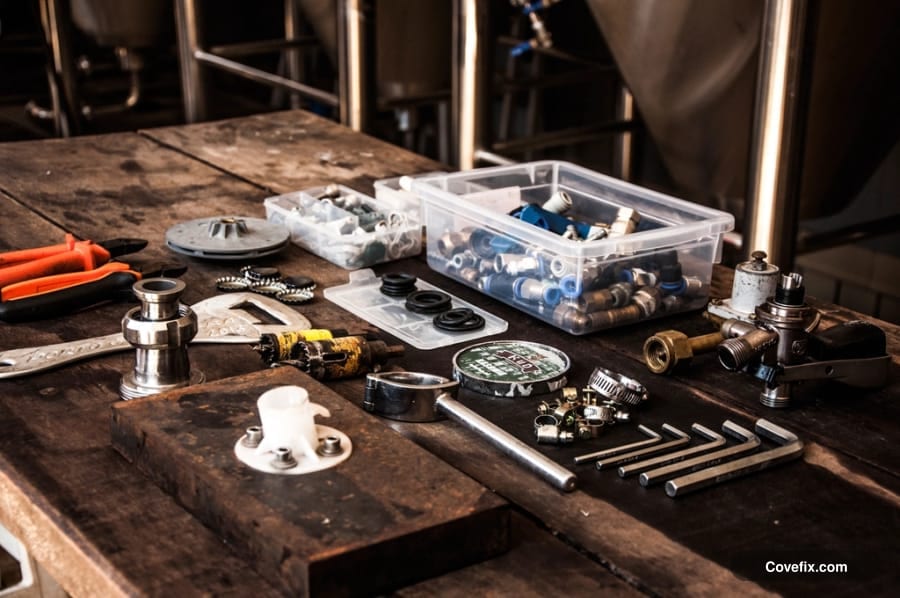 Everything that can fail inside a toilet tank, laid out: seals, gaskets, and fittings. None of it over $18.
Step-by-Step
Run the dye test
Lift the tank lid and set it somewhere flat (porcelain lids crack easily on tile). Drop food coloring into the tank water and wait 15 minutes without flushing. Colored water appearing in the bowl means the flapper is leaking, so go to Step 3. Clear bowl, but water trickling into the open top of the overflow tube? That’s the fill valve. Go to Step 2.
If your toilet is not running constantly and only tops itself up every so often, that is the same leak wearing a quieter disguise. See why your toilet refills randomly, and how to stop it.
Set the water level
The waterline should sit about an inch below the top of the overflow tube. If it’s spilling in, lower the float: on most modern fill valves that’s a screw or clip on the side of the float. Turn or slide it until the valve shuts off at the right height. If the valve won’t hold a consistent level no matter what you set, its internal seal is gone; replacing the whole valve is easier and cheaper than fighting it.
Replace the flapper
Turn off the supply valve at the wall behind the toilet, then flush and hold the handle down to empty the tank. Unhook the chain from the handle arm, and pop the flapper’s ears off the two pegs on the sides of the overflow tube. While it’s out, wipe the seat rim clean. In hard-water homes, the same mineral crust that clogs shower heads builds up here and stops the new flapper from sealing. Seat the new flapper and reattach the chain with about half an inch of slack.
Refill and test
Open the supply valve, let the tank fill, and flush twice. The fill should stop cleanly and the tank should go silent within a minute or so. Still suspicious? Re-run the dye test overnight.
Time and Cost
| Fix | Time | Parts cost |
|---|---|---|
| Flapper replacement | 15 min | $5–$8 |
| Fill valve adjustment | 5 min | $0 |
| Fill valve replacement | 30 min | $12–$18 |
| Plumber doing the same job | — | $150–$300 |
Why This Works
A toilet tank is a beautifully simple system: the fill valve lets water in, the flapper lets it out, and the overflow tube is the failsafe in between. The flapper is the only rubber part sitting under chlorinated water around the clock, so it’s nearly always the first thing to die. The sealing edge slowly hardens and warps until it weeps. Water sneaks into the bowl, the float drops, the fill valve wakes up, and you get that ghostly refill sound at 2 a.m.
Mistakes to Avoid
- Buying the wrong flapper size. Toilets take a 2-inch or a 3-inch flapper, and the wrong one physically cannot seal. Check before you drive to the store.
- Getting the chain length wrong. Too tight and it holds the flapper slightly open, an invisible leak. Too loose and the slack gets trapped under the flapper. Half an inch of slack is the target.
- Overtightening anything. Tank porcelain cracks long before a fitting strips. Hand-tight plus a quarter turn is the rule for every connection in the tank.
- Drop-in chlorine tablets. They chew through rubber parts in months. If your flapper died young, this is usually why.
A tank that behaves but a bowl that will not go down is the opposite problem entirely. That is a clog, and how to unclog a toilet walks through it with a plunger and without one.
FAQ
Why does my toilet run for a few seconds every hour, then stop?
That's a phantom flush. The flapper is leaking slowly, the tank level drops, and the fill valve tops it back up. Run the dye test. If color reaches the bowl without flushing, replace the flapper.
Can a running toilet really raise my water bill?
Yes, significantly. A steady leak can waste a couple hundred gallons a day, which shows up as a noticeably higher bill within one billing cycle. It's usually the most expensive small leak in a house.
Do drop-in tank cleaning tablets damage toilets?
The chlorine-based ones degrade rubber parts. Flappers exposed to them warp and fail in months instead of years, and some manufacturers void their warranty over it. Clean the bowl directly instead.
I replaced the flapper and it still runs. Now what?
Check two things: the seat the flapper rests on (run a finger around the rim, since roughness or mineral crust prevents a seal) and the fill valve, which may be leaking internally. A seat that's pitted needs a repair seal kit; a bad fill valve is a $15 swap.
Related fixes
Bathroom
Low Shower Water Pressure? Fix It in One Evening
Weak shower pressure is usually a mineral-clogged head, not your pipes. Soak it in vinegar, check the inlet screen, and know when it's something bigger.
Time20 min active + 1–2 hr soak Cost$2–$25 moderate
Bathroom
Toilet Flapper Replacement: Get the Right Size the First Time
Most toilets take a 2-inch flapper; newer high-efficiency models need 3-inch. How to tell which yours needs, choose one, and install it in 10 minutes.
Time10 min Cost$5–$15 easy