Washing Machine Smells? Clean These 3 Spots (Gasket, Drum, Filter)

If this fix touches water, gas, or power, the guide starts with the shutoff step and says when a licensed pro should take over.
Product links in this guide are affiliate links. If you buy through one, we may earn a small commission at no extra cost to you. It never changes which products we recommend.
There’s a special betrayal in pulling clothes out of the washer and finding they smell worse than they went in. A musty front-loader isn’t broken and doesn’t need a technician. It needs three specific spots cleaned, two of which most owners have never looked at.
Quick Answer
The smell lives in three places: the door gasket (pull the rubber fold back and the black grime line is mold), the drum (an invisible film of detergent residue), and the drain filter (a trap behind the bottom front panel holding lint and stale water). Clean all three (cloth and diluted bleach for the gasket, a hot tub-clean cycle for the drum, a twist-cap drain for the filter), then keep it away by leaving the door open and halving your detergent.
What You’ll Need
- Rubber gloves and old towels, plus a shallow pan or baking dish
- Washing machine cleaner tablets (~$10 for six) or white vinegar and baking soda
- Diluted bleach (one part bleach to ten parts water) or an all-purpose cleaner, for the gasket
- An old toothbrush
One safety line before starting: never let bleach and vinegar meet: same session, same surface. The combination releases chlorine gas. Pick one per cleaning day and rinse well.
Step-by-Step
The gasket fold
Open the door and pull the rubber gasket’s inner fold back toward you, working around the full circle. Expect a gray-black line of buildup, maybe a sock. Wipe it out with a cloth and all-purpose cleaner; for actual mold spots, use the diluted bleach on a cloth, gloves on, room ventilated. Get into the drain holes at the bottom of the fold with the toothbrush.
If the smell seems to live only in that rubber ring, the shorter fix is how to clean a front load washer gasket that smells. It is the same root cause, just the fast version.
The drum
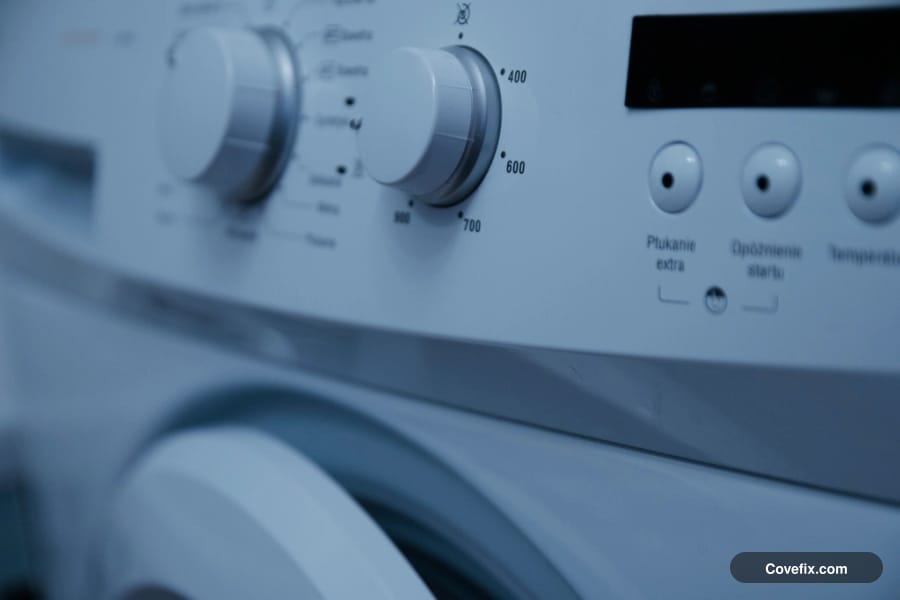 Look for a “tub clean” or “self clean” cycle. On most machines it’s the hottest, longest program.
Run the machine’s tub clean cycle (or its hottest, longest cycle) with a washer cleaner tablet and nothing else in the drum. No tablet on hand? Two cups of white vinegar in the drum does a reasonable version. Occasional vinegar use is fine, though some manufacturers advise against making it a routine, so the tablet is the better habit.
The drain filter
This is the step that separates a temporary fix from a real one. Open the small panel at the machine’s bottom front corner. Lay towels down, slide the shallow pan under, and twist the filter cap out slowly, because a cup or two of genuinely unpleasant water comes with it. Pull the lint, coins, and hair ties off the filter, rinse it at the sink, and screw it back in firmly. If your machine has a little drain hose next to the filter, empty that first.
The detergent drawer
Pull the drawer fully out (most have a release tab), and rinse the mold off it and out of its cavity. Softener residue is usually the worst offender here.
Change the two habits
Leave the door and the drawer cracked open between washes, and cut your detergent dose. Most people use two to three times what a high-efficiency machine needs, and the excess is exactly what the mold eats. Those two habits are the whole prevention program, plus a tub-clean cycle monthly.
Time and Cost
| Item | Amount |
|---|---|
| Active cleaning time | ~30 min |
| Tub-clean cycle | 1–2 hr, unattended |
| Cleaner tablets | ~$10 for a 6-month supply |
| Vinegar/bleach version | Effectively $0 |
Why This Works
A front-loader is a sealed, dark, warm box that never fully drains. The gasket fold and the filter hold water by design. Add excess detergent, which high-efficiency machines don’t use enough water to rinse away, and you’ve built a biofilm farm: the same soap-and-bacteria film that coats slow bathroom drains. Cleaning removes the colony; the open door and lighter dosing remove its food and water. Skip the habits and you’ll be back in a month; keep them and the machine stays neutral-smelling for good.
Mistakes to Avoid
- Ignoring the drain filter. It’s the most common miss and the most common answer to “I cleaned everything and it still smells.”
- Running one sanitize cycle and changing nothing. The cycle kills today’s mold; the closed door and heavy dosing regrow it by next month.
- Overusing fabric softener. It leaves exactly the film the mold thrives on. Halve it, or switch to dryer balls for towels.
- Mixing cleaning chemistry. Bleach day or vinegar day. Never both.
FAQ
The smell came back within a week. What did I miss?
Usually the drain filter. It's the spot most people skip because they don't know it exists. If you did clean it, check the drain hose for a kink holding standing water, and be honest about the habits: a closed door and heavy detergent dosing will regrow the smell in days.
My towels still smell musty even after cleaning the machine. Why?
The towels themselves are carrying detergent residue and bacteria. Strip them: wash hot with a cup of white vinegar and no detergent, then once more hot with nothing. If they come out fresh, the machine was the cause and the towels were the evidence.
Do top-loaders get this problem too?
Far less, because they drain more completely and don't seal airtight. But detergent film still builds up, so a tub-clean cycle every couple of months applies to them too. The gasket and filter steps are front-loader specifics.
Is it safe to run bleach in the washer?
Most manufacturers explicitly allow bleach in a tub-clean or hot cycle, but check your manual. Two rules: never in the same session as vinegar (the combination releases chlorine gas), and run a rinse cycle after so the next load of darks isn't the discovery mechanism.
Related fixes
Walls, Doors & Floors
Patch Nail Holes in Drywall Before Move-Out (10 Minutes, $8)
Spackle, a putty knife, and fine sandpaper make nail holes disappear. The exact steps, drying times, and how to handle paint that doesn't match.
Time10 min per room + drying Cost$8–$12 easy
Bathroom
Unclog a Slow Bathroom Sink in 15 Minutes, No Chemicals
A slow bathroom sink is almost always hair caught at the pop-up stopper. Pull it, clear it with a $4 zip tool, and clean the P-trap if needed.
Time15–30 min Cost$3–$5 easy