Fix a Squeaky Door Hinge for Good (WD-40 Isn't Enough)
If this fix touches water, gas, or power, the guide starts with the shutoff step and says when a licensed pro should take over.
Product links in this guide are affiliate links. If you buy through one, we may earn a small commission at no extra cost to you. It never changes which products we recommend.
Every home has one: the door that announces every midnight glass of water to the entire household. You’ve probably already sprayed it with something, and it probably came back. That’s not bad luck. It’s the wrong lubricant applied to the wrong spot, and five minutes of doing it properly ends it for years.
Quick Answer
Pull each hinge pin (door closed, tap the pin up from below), wipe it clean, coat it with silicone spray or white lithium grease, drop it back in, and swing the door a dozen times. WD-40 alone doesn’t last. It’s a penetrating solvent, not a lubricant, so it flushes the squeak away for a week, evaporates, and leaves the bare metal to start singing again.
What You’ll Need
- A hammer and a nail set, a thick nail, or a flathead screwdriver
- Silicone spray or white lithium grease, $6–$8 (either works; lithium grease lasts longest on load-bearing metal)
- A rag, and a piece of cardboard to catch drips
Step-by-Step
Close the door and work one hinge at a time
A closed, latched door hangs steady while a pin is out. Do one hinge start-to-finish before touching the next, and the door never moves.
Tap the pin up and out
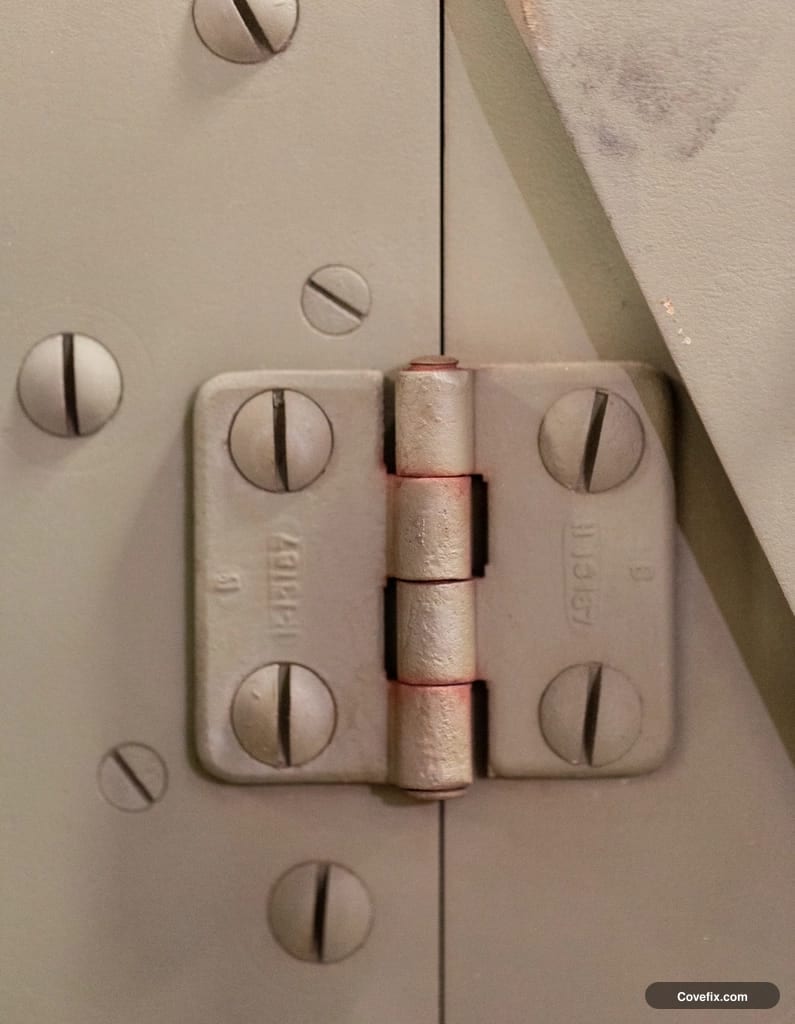 The squeak lives inside the knuckles, the interlocking barrels the pin runs through.
Set the nail set (or nail) against the bottom of the pin, under the lowest knuckle, and tap upward with the hammer. Once the head rises, pull it free. Painted-over pin that won’t budge: wedge the flathead under the pin’s head and tap the screwdriver instead. (This is the one step where a shot of WD-40 genuinely helps. Freeing a stuck pin is what penetrating oil is for.)
Read the pin, then clean it
Look at what the rag wipes off. Black paste is metal dust from years of dry grinding: normal, and exactly what you’re fixing. Wipe the pin bare.
Grease the pin, not the doorway
Coat the pin with lithium grease (a thin film along its whole length) or give it a pass of silicone spray, and shoot a little into the top of the knuckle stack. The cardboard goes on the floor below for the drips.
Reseat and work it in
Drop the pin in, tap it home, and swing the door ten or fifteen times to spread the film through the knuckles. Wipe off anything that squeezes out. Grease on a hinge is invisible; grease on a door edge finds every sleeve in the house.
Still squeaking? It’s not the pin
Open the door slowly and listen for where the sound lives. From the hinge: tighten every hinge screw, because loose leaves flex and creak (the spinning-screw fix is in the FAQ). From the latch side: look for a shiny rub mark on the jamb where the door drags, which is a sagging-hinge problem, not a lubrication one. High and rhythmic from inside the knuckle on an old painted door: paint got into the knuckle. Scrape it out of the joint and re-grease.
Time and Cost
| Scope | Time | Cost |
|---|---|---|
| One door, three hinges | ~5 min | — |
| Every door in the house | Under an hour | One $7 can covers it all, for years |
| Replacing a worn-out hinge entirely | 15 min | ~$5 per hinge |
Why This Works
A hinge squeak is stick-slip: two dry metal surfaces in the knuckle alternately gripping and releasing hundreds of times per swing, fast enough to become a tone. Greases with body (lithium, silicone) leave a film thick enough to keep the surfaces apart and stable enough to stay put for years. WD-40’s job description is different: it’s a water displacer and penetrant, brilliant at freeing seized parts, too thin and too temporary to keep them quiet. Use it to free the pin; never as the final coat.
Mistakes to Avoid
- Spraying the closed hinge from outside. The squeak lives between the pin and the knuckle bore. Lubricant that never gets inside is a scented pause button.
- Pulling all three pins at once. The door comes off its hinges, onto your foot, into the frame. One at a time costs nothing.
- Cooking oils. Rancid, gummy, dusty. See the FAQ.
- Painting over hinges. Paint inside the knuckle is a squeak with tenure. It grinds against the pin no matter what you spray. Scrape first, then lubricate.
Doing a move-out sweep? This pairs with patching the nail holes, and together they cover the two things a landlord notices in the first thirty seconds of a walkthrough. And if the offending door is the front door, seal the draft while the screwdriver is out.
FAQ
Can I use olive oil on a squeaky hinge?
It'll silence the squeak for a few days, then go sticky and start collecting dust, because cooking oils oxidize and gum up. If it's genuinely all you have tonight, fine, but plan on doing it properly with silicone or lithium grease within the week.
What about the old bar-of-soap trick?
Rubbing dry soap on the pin is a real old-timer method and works better than nothing, but it wears off quickly and attracts moisture. It made sense before a can of silicone spray cost six dollars. It doesn't anymore.
I lubricated it and the squeak came back in a month. Why?
Three usual reasons: the pin never actually came out (spraying the outside of the knuckle only treats the surface), there's paint inside the knuckle grinding against the pin, or the hinge is simply worn oval after decades. The first two are fixable tonight; a worn hinge is a five-dollar like-for-like replacement.
The door squeaks and sticks or drags. Same fix?
The squeak and the drag are usually one problem: a sagging top hinge. Tighten all its screws first. If a screw just spins in the hole, replace it with a 3-inch screw that reaches through the jamb into the wall stud and pulls the whole door back square.
Related fixes
Walls, Doors & Floors
Patch Nail Holes in Drywall Before Move-Out (10 Minutes, $8)
Spackle, a putty knife, and fine sandpaper make nail holes disappear. The exact steps, drying times, and how to handle paint that doesn't match.
Time10 min per room + drying Cost$8–$12 easy